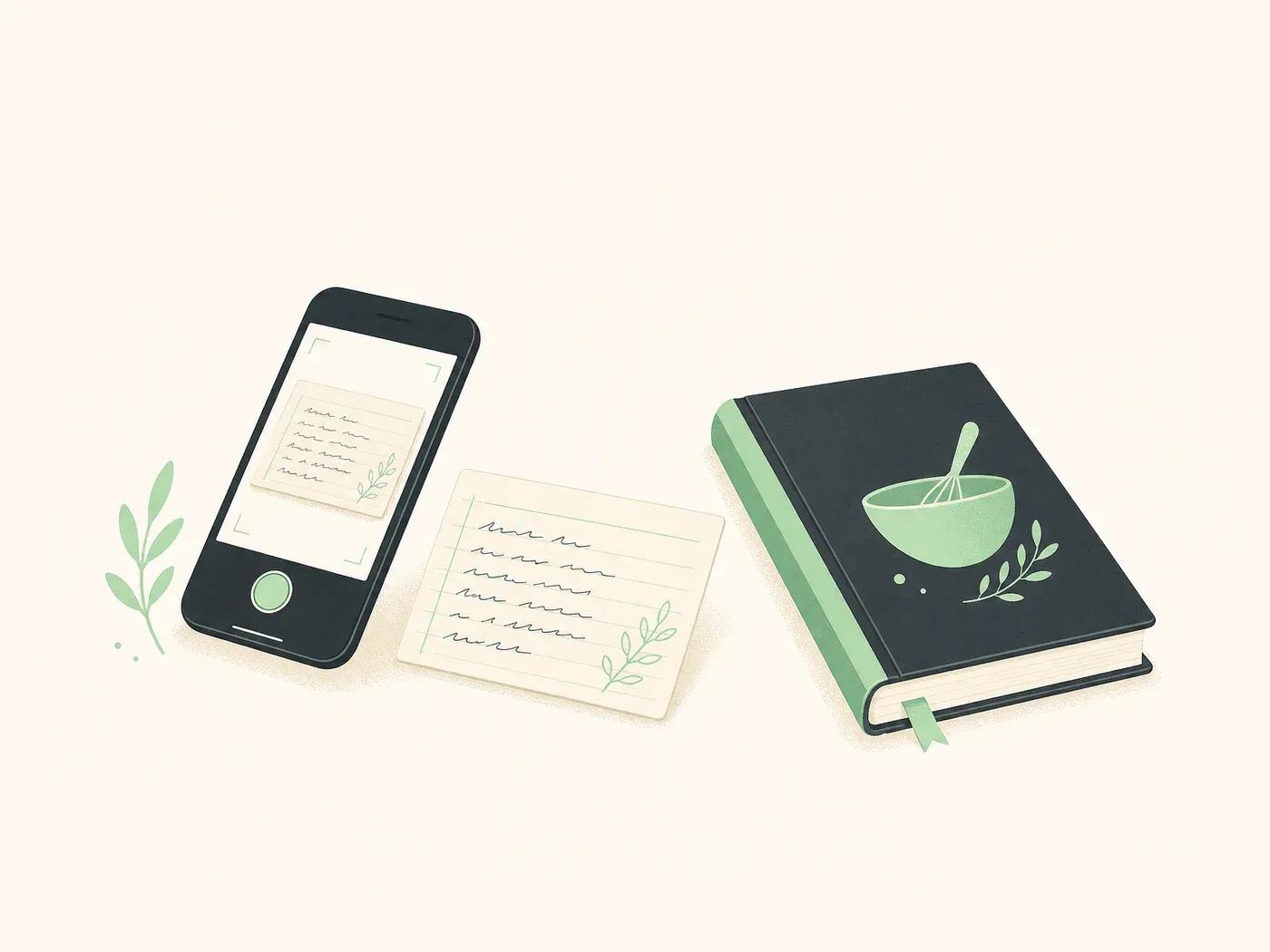
Photograph well before you rewrite
Good photos make extraction easier. Shoot in daylight, flatten the page, avoid harsh shadows, and capture the whole card including margin notes.
Keep the original images in a folder named by dish. They remain your backup if a transcription is unclear.
Extract text, then verify by cooking logic
Whether you type or use assisted extraction, always review ingredients and steps. Handwriting errors hide in numbers and abbreviations.
Read the recipe as if you had never cooked it. If a step jumps, fix it now while the source is in front of you.
Normalize units and structure
Old cards mix cups, grams, “a knob of butter,” and unspoken assumptions. Normalize gently: keep the spirit of the recipe while making it reproducible.
Use one structure for every page so the final book feels intentional.
- Title
- Yield and time
- Ingredients list
- Numbered method
- Source note (whose card, which year)
From digital archive to printed cookbook
Once recipes are clean, you can search them, share them, and rearrange chapters without damaging originals.
Printing becomes optional and delightful: a finished object built from content you already trust.
Use Kulinia’s photo-to-recipe flow
Kulinia is designed to start from photos of paper recipes, help you structure the content, and produce a consistent cookbook layout.
You can keep everything digital, or order a printed book when the collection deserves a place on the shelf.